
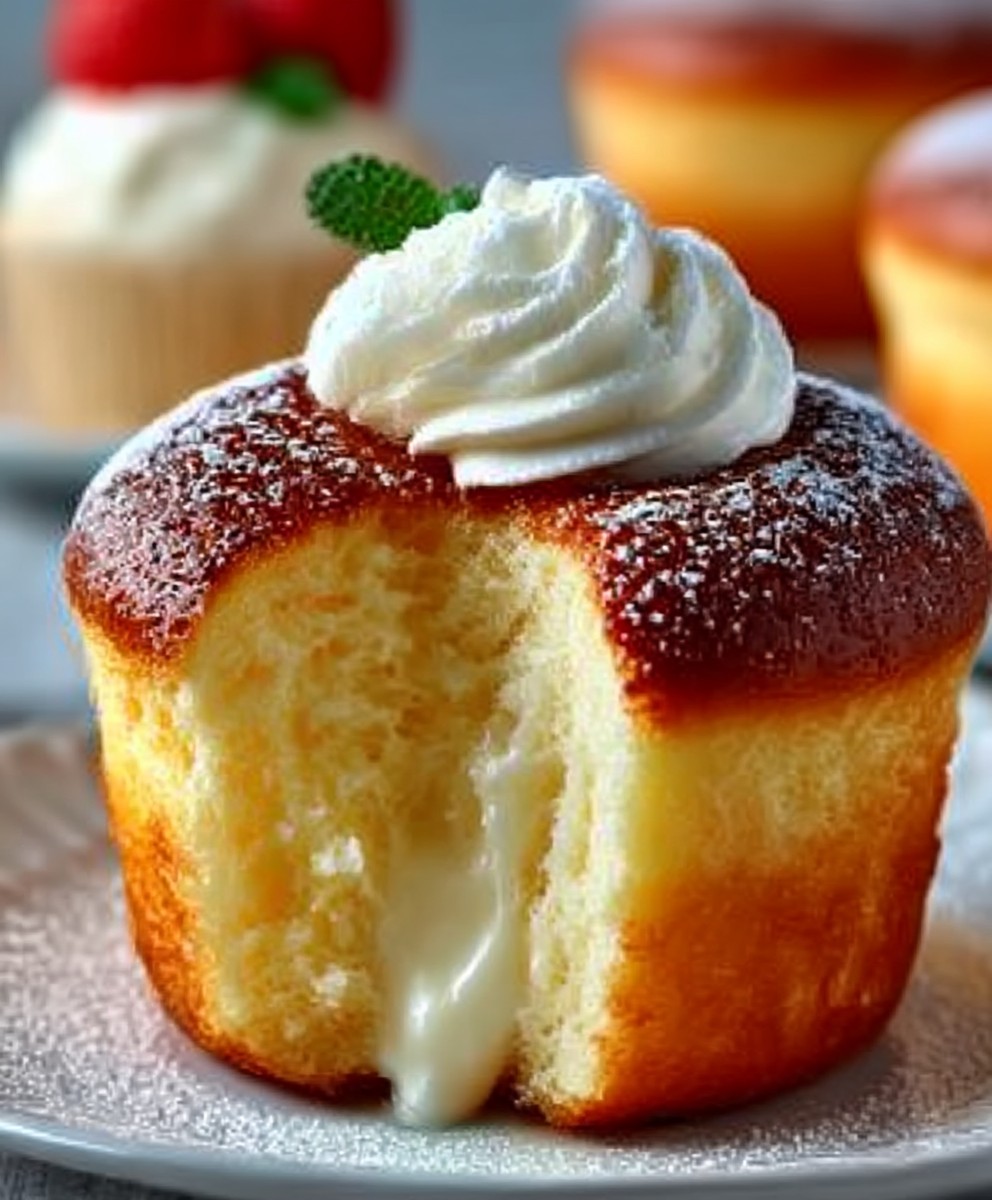
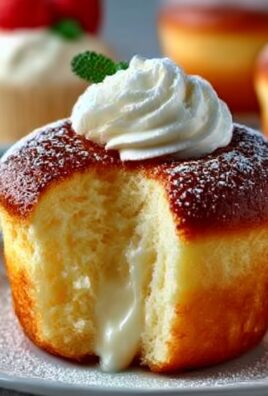
Forget everything you thought you knew about dense, cracked cheesecake bricks. We are diving headfirst into the ethereal, cloud-like realm of theFluffy Japanese Cotton Cheesecake Cupcakes—a dessert so light it might just float away if you don’t eat it immediately.
This recipe transforms that notoriously demanding whole cake into perfectly portable, wobbly, individual servings, delivering an irresistible flavor with none of the usual cheesecake stress.
- Achieve a revolutionary texture that melts instantly in your mouth, feeling more like a sweet, milky cloud than a traditional baked dessert.
- These charming cupcakes prevent the common cracking issues, baking beautifully in a convenient water bath technique for guaranteed moistness.
- Their delicate, pale golden tops and subtle sweetness make them visually stunning, requiring only a simple dusting of powdered sugar to finish.
- Easily adaptable for various toppings, from fresh raspberries to a bright lemon curd, making them perfect for any special occasion or tea time gathering.
The Quest for the Perfect Wiggle: Why Japanese Cotton Cheesecake Is Superior
Most people who bake cheesecake harbor deep-seated trauma related to deep cracks running across the surface, resembling a culinary earthquake aftermath. You spend hours nurturing that luxurious batter, only for the oven gods to smite it with dryness. This is where the Japanese style swoops in, cape billowing dramatically, to save the day. Unlike the heavy, dense, and often overly sweet New York counterpart that relies on sheer gravity to hold it together, the Japanese version is all about air, grace, and impeccable technique.
The secret weapon here is the combination of a precise baking method (the gentle steam of a water bath) and the structure provided by a perfectly whipped meringue. We are essentially merging a soufflé’s lightness with a classic cheesecake’s creamy tang. The result? A dessert that literally jiggles when you touch it. Converting this complex cake into individualFluffy Japanese Cotton Cheesecake Cupcakesmakes the entire process far less intimidating. If a crack appears, who cares? It’s a tiny, charming imperfection on an otherwise perfect portion. Plus, individual cupcakes cook more evenly, reducing the risk of the dreaded sunken middle. So, put away your dense brick recipes; we are entering the age of the jiggly cloud.
Essential Tools for Mastering the Fluffy Japanese Cotton Cheesecake Cupcakes
While the ingredients are straightforward, achieving that signature cotton texture relies heavily on using the right equipment. Don’t worry, you don’t need industrial kitchen gear, but a few key items will ensure your success. First and foremost, you absolutely need a reliable hand mixer or stand mixer. Whipping the egg whites to stiff, glossy peaks is the backbone of this recipe, and attempting it by hand is a workout reserved only for those seeking maximum forearm definition. Next, accurate measurements are paramount, so dust off those digital scales, especially for the flour and cream cheese.
For baking the cupcakes, standard muffin tins are ideal, but you must use sturdy paper liners—the kind that hold their shape. The delicate nature of the batter means it needs support during the gentle steaming process. Finally, a large roasting pan or oven-safe dish is necessary for the crucial water bath, which surrounds the muffin tin and provides the moist, steady heat that coaxes the cupcakes into their ethereal form. A rubber spatula is also essential for the folding stage; treat it like a surgical instrument, aiming for maximum incorporation with minimum deflation.
The Meringue Magic: Transforming Egg Whites into Clouds
The meringue isn’t just an addition; it is the engine that drives the fluffiness train. This step is non-negotiable and requires careful attention. When whipping the egg whites, you incorporate millions of tiny air bubbles. Stabilizing these bubbles with sugar ensures they don’t collapse when introduced to the heavy, rich cream cheese base. The difference between a beautifully wobbly cake and a flat, dense disc usually boils down to the meringue technique.
Always start with clean, grease-free bowls and beaters. Any trace of fat, even a truthahn-speck of yolk, will prevent the egg whites from whipping properly. We whip the whites until they reach stiff peaks—this means when you pull the whisk out, the peaks stand straight up and don’t flop over, but they shouldn’t look dry or grainy. Once the meringue is ready, folding it into the cream cheese mixture requires patience and a light touch. You want to combine the mixtures until they are just homogenous, using broad, sweeping movements, cutting through the center and folding up. Overmixing releases the trapped air, turning your cloud back into heavy liquid. Think gentle encouragement, not aggressive stirring, and you will achieve that perfectly airy batter ready for the molds.
Ingredients for Fluffy Japanese Cotton Cheesecake Cupcakes
Here’s what you’ll need to make this delicious dish:
- Cream CheeseUse full-fat, block-style cream cheese at room temperature for the smoothest, most homogenous base mixture.
- Unsalted ButterChoose high-quality unsalted butter, as it adds necessary richness and structure without introducing unwanted sodium variations.
- Milk or CreamWhole milk or a splash of heavy cream provides moisture and contributes to the overall creamy mouthfeel of the finished cupcake.
- Egg YolksThese provide the primary flavor, color, and richness, acting as an emulsifier to bind the fatty components together beautifully.
- All-Purpose FlourJust a small amount of finely sifted flour is used to stabilize the mixture, preventing collapse without making the cake dense or bread-like.
- Granulated SugarThis is split between the cream cheese base for sweetness and the egg whites for stabilizing the crucial meringue.
- Egg WhitesThey must be separated perfectly and whipped stiffly, forming the essential light structure of the famous cotton texture.
- Lemon Juice or VinegarA tiny dash helps stabilize the egg whites during whipping, ensuring they reach maximum volume and rigidity.
The full ingredients list, including measurements, is provided in the recipe card directly below.
How to Make Fluffy Japanese Cotton Cheesecake Cupcakes
Follow these simple steps to prepare this delicious dish:
-
Prepare the Base and Preheat the Oven
Preheat your oven to 325°F (160°C). Line a standard muffin tin with paper liners. Set a large roasting pan on the lower rack of the oven. In a heatproof bowl set over a simmering pot of water (or using a double boiler), melt the cream cheese, butter, and milk together, stirring until completely smooth. Remove from heat and stir in the egg yolks one at a time, followed by the sifted flour and a pinch of salt until the mixture is uniform.
-
Whip the Meringue
In a separate, very clean bowl, combine the egg whites and the small amount of lemon juice. Using a stand mixer or hand mixer, start whipping the whites on medium speed. Gradually stream in the granulated sugar once the whites look frothy. Increase the speed and continue beating until the meringue forms stiff, glossy peaks; the peaks should stand upright when the whisk is lifted.
-
Fold the Batter
Gently fold one-third of the meringue into the cream cheese base using a rubber spatula to lighten the mixture. Once incorporated, gently fold in the remaining meringue in two additions, taking care not to overmix. Stop folding immediately when no streaks of egg white remain; the batter should be airy, fluffy, and smooth.
-
Bake in the Water Bath
Pour the prepared batter into the lined cupcake wells, filling them about three-quarters full. Carefully pour hot water into the roasting pan already in the oven, ensuring the water level comes about halfway up the sides of the muffin tin. This creates the steam bath. Bake for 20 minutes at 325°F (160°C). Then, without opening the door, drop the temperature to 300°F (150°C) and bake for another 25–30 minutes.
-
Cooling and Finishing
Turn off the oven but leave the cupcakes inside the water bath with the door slightly ajar for 30 minutes. This slow cooling prevents sudden temperature changes, which are the main culprits behind shrinkage and cracking. Remove the cupcakes from the oven, let them cool completely on a wire rack, and then chill them in the refrigerator for at least 4 hours before serving.
Transfer to plates and dust heavily with powdered sugar for the perfect finishing touch that highlights their simple, elegant beauty.
Troubleshooting Tips for the Cotton Cheesecake Baker
Even though we made them into easier cupcake form, cotton cheesecakes still demand precision. If your cupcakes sank in the middle, the primary culprit is usually one of two things: overmixing the batter, which deflates the precious meringue, or cooling too quickly. Remember, the goal is slow, gentle baking and even slower cooling. Never take the hot cupcakes straight out of the oven and place them on the counter. That thermal shock guarantees a shriveled mess. Utilize the resting period inside the cooling oven with the door cracked open; this is the most critical step for maintaining that puffy height.
If your cheesecake batter seems thin or runny before baking, you likely incorporated some fat into your egg whites, or perhaps your cream cheese mixture was too warm when you started folding. Always ensure your bowls are sparkling clean and that the cream cheese base has cooled slightly before introducing the meringue. Lastly, if the texture feels heavy rather than airy, ensure you sifted the flour. Flour tends to clump, and even a tiny excess amount can compromise the delicate balance required for that signature fluffy rise.
Customizing Your Japanese Cheesecake Cupcakes
While theseFluffy Japanese Cotton Cheesecake Cupcakesare exquisite on their own, their delicate nature makes them the perfect canvas for creative flavor additions. You can easily incorporate subtle extracts or zest into the cream cheese base before folding the meringue. For a citrus burst, add the zest of one large orange or the juice of half a lime. If you prefer a warmer profile, a teaspoon of vanilla bean paste works wonders, adding beautiful flecks and a profound aroma. Remember to keep liquid additions minimal to maintain the structural integrity of the batter.
Regarding toppings, stick to things that won’t overwhelm the subtle tang. A light glaze made from powdered sugar and fruit juice (like passion fruit or raspberry) drizzles nicely without adding too much weight. Fresh berries—strawberries, blueberries, or raspberries—are classic choices, providing a necessary pop of tartness against the sweetness. For those seeking an ultra-elegant presentation, a dollop of softly whipped cream (without sugar) and a thin layer of fruit preserves transforms these simple cupcakes into gourmet desserts worthy of any high tea event.
Frequently Asked Questions About Japanese Cheesecake
Why do these cupcakes need a water bath?
The water bath, or bain-marie, provides gentle, moist heat, ensuring the delicate proteins in the eggs and cream cheese cook slowly and evenly. This prevents the edges from setting too quickly and cracking while keeping the center incredibly moist and jiggly.
Can I make these ahead of time?
Absolutely. These cheesecakes taste even better the day after they are baked, once the flavors have fully melded and the texture has settled. Store them in an airtight container in the refrigerator for up to four days.
What is the ideal temperature for the cream cheese mixture?
When you start folding the meringue, the cream cheese mixture should be slightly warm or at room temperature, but never hot. If the base is too hot, it will instantly melt the air structure of the meringue, causing the entire batter to deflate.
Why did my cupcakes shrink after cooling?
Shrinkage is normal for this type of high-air cake, but excessive shrinkage usually means the cake baked too fast or cooled too quickly. Strict adherence to the slow cooling step—leaving them in the oven after it’s turned off—is the best way to minimize dramatic shrinkage.
Welcome, fellow dessert enthusiasts, to a baking journey that sits somewhere between a scientific experiment and a dream. If you’ve ever chased that mythical, cloud-like texture promised by the Japanese cotton cheesecake, you know the heartbreak involved. The full-sized version is notoriously temperamental—it cracks, it collapses, it sulks in the oven corner like a moody teenager. We are here today to bypass that drama entirely.
The Quest for Cloud Perfection: Mastering Fluffy Japanese Cotton Cheesecake Cupcakes
For years, I treated the traditional Japanese cheesecake like a baking nemesis. It was too fussy, too sensitive to drafts, and demanded an almost surgical precision that felt impossible after a long day. But then, a moment of profound laziness led to a stroke of genius: why fight the size? Why not miniaturize the magic? By transforming this delicate delight into individual, manageable portions, we unlock the secret to perfectly cooked, irresistibly airy,Fluffy Japanese Cotton Cheesecake Cupcakes.
These aren’t your typical dense, tangy New York cheesecakes. Oh no. These are soufflé-cheesecake hybrids that utilize precise emulsification and the mighty power of meringue to float on your palate. When you take a bite, the texture is so ethereally soft it feels like the dessert vanished mid-chew. It is truly the single most addictive dessert you will ever bake, and the cupcake format ensures every single one is cooked evenly, minimizing the notorious cracking incidents that plague the full cake.
Ingredients: Gathering Your Cloud-Building Materials
The beauty of this recipe lies in its simplicity; we use everyday pantry items, but the technique makes all the difference. Make sure all your dairy ingredients and eggs are at room temperature before you begin—this is non-negotiable for smooth batter integration.
Wet Ingredients
- 225g Cream Cheese (full fat, softened)
- 60g Unsalted Butter
- 120ml Milk (full fat)
- 6 large Egg Yolks
- 1 teaspoon Vanilla Powder
- 1 tablespoon Lemon Juice (freshly squeezed)
Dry Ingredients
- 60g All-Purpose Flour
- 20g Cornstarch
- 1/4 teaspoon Salt
Meringue
- 6 large Egg Whites (cold is best for stability)
- 120g Granulated Sugar
- 1 teaspoon Cream of Tartar (or white vinegar/extra lemon juice)
The Secret Science of Fluffy Japanese Cotton Cheesecake Cupcakes
The core technique here involves two stages: creating a rich, smooth base batter, and whipping the most stable, glorious meringue you can manage. Do not rush the cooling, and definitely do not rush the folding. This process requires patience, but the rewards are truly astronomical.
Step 1: The Creamy Base and Emulsification
Preheat your oven to 160°C (325°F) and prepare a 12-cup muffin tin with paper liners. Crucially, we will also need a deep roasting pan for the water bath—ensure the roasting pan is large enough to fit the muffin tin and hold at least two inches of water.
In a medium saucepan, combine the cream cheese, butter, and milk. Heat gently over low heat, stirring constantly until the mixture is completely smooth and uniform. Do not let it boil! Remove this mixture from the heat immediately. Whisk in the egg yolks one at a time, followed by the vanilla powder and lemon juice. This creates a wonderfully rich, thick emulsion. Sift the flour, cornstarch, and salt directly into the creamy mixture. Whisk until just combined. You should have a silky, slightly thick batter. Set this aside.
Step 2: Whipping the Meringue to Perfection
This step is where the “cotton” factor comes from. Place your cold egg whites into an absolutely spotless, grease-free bowl. Begin whipping on medium speed until they become frothy. Add the cream of tartar (or alternative acid). Gradually stream in the granulated sugar while increasing the speed to medium-high.
Continue whipping until you reach stiff peaks. Stiff peaks mean that when you lift the whisk, the peaks stand straight up and curl over slightly at the very tip, holding their shape perfectly. Over-whipping can destroy the texture, so stop as soon as the peaks hold firm. If the meringue looks granular or dry, you have gone too far!
Step 3: The Gentle Fold
Now comes the delicate dance of folding. Take about a third of the stiff meringue and gently fold it into the cream cheese batter using a rubber spatula. This lightens the heavy batter, making it easier to incorporate the rest of the air without deflating it.
Once the first third is incorporated, gently add the remaining meringue in two batches. Use a slow, under-and-over motion, scraping the sides and bottom of the bowl. Stop folding the instant the last streak of white disappears. An overly mixed batter will deflate and result in dense, heavy cupcakes. A perfect batter will be voluminous and light.
Baking Bliss: The Water Bath Method
Carefully pour or spoon the airy batter into the prepared cupcake liners, filling them about three-quarters full. Place the muffin tin into the large roasting pan.
Now, fill the roasting pan with hot water (not boiling, but very hot) until the water level reaches about halfway up the sides of the muffin tin. This water bath, known as a bain-marie, provides gentle, consistent heat and high humidity, which prevents the exterior of the cheesecakes from setting too quickly and cracking. The slow, moist bake is absolutely vital for achieving that signature fluffy texture.
Bake for 20 minutes at 160°C (325°F). Then, without opening the oven, reduce the temperature to 140°C (285°F) and bake for another 40–50 minutes, or until the tops are golden brown and the centers are mostly set but still have a slight jiggle. Turn the oven off, prop the door open slightly with a wooden spoon, and let theFluffy Japanese Cotton Cheesecake Cupcakescool slowly inside the oven for at least one hour. This slow, protected cool-down prevents the temperature shock that causes deflation.
Once fully cooled in the oven, remove them from the water bath and let them cool completely on a wire rack before serving. They taste absolutely heavenly served chilled or at room temperature, dusted with powdered sugar.
Perfecting the Cooking Process
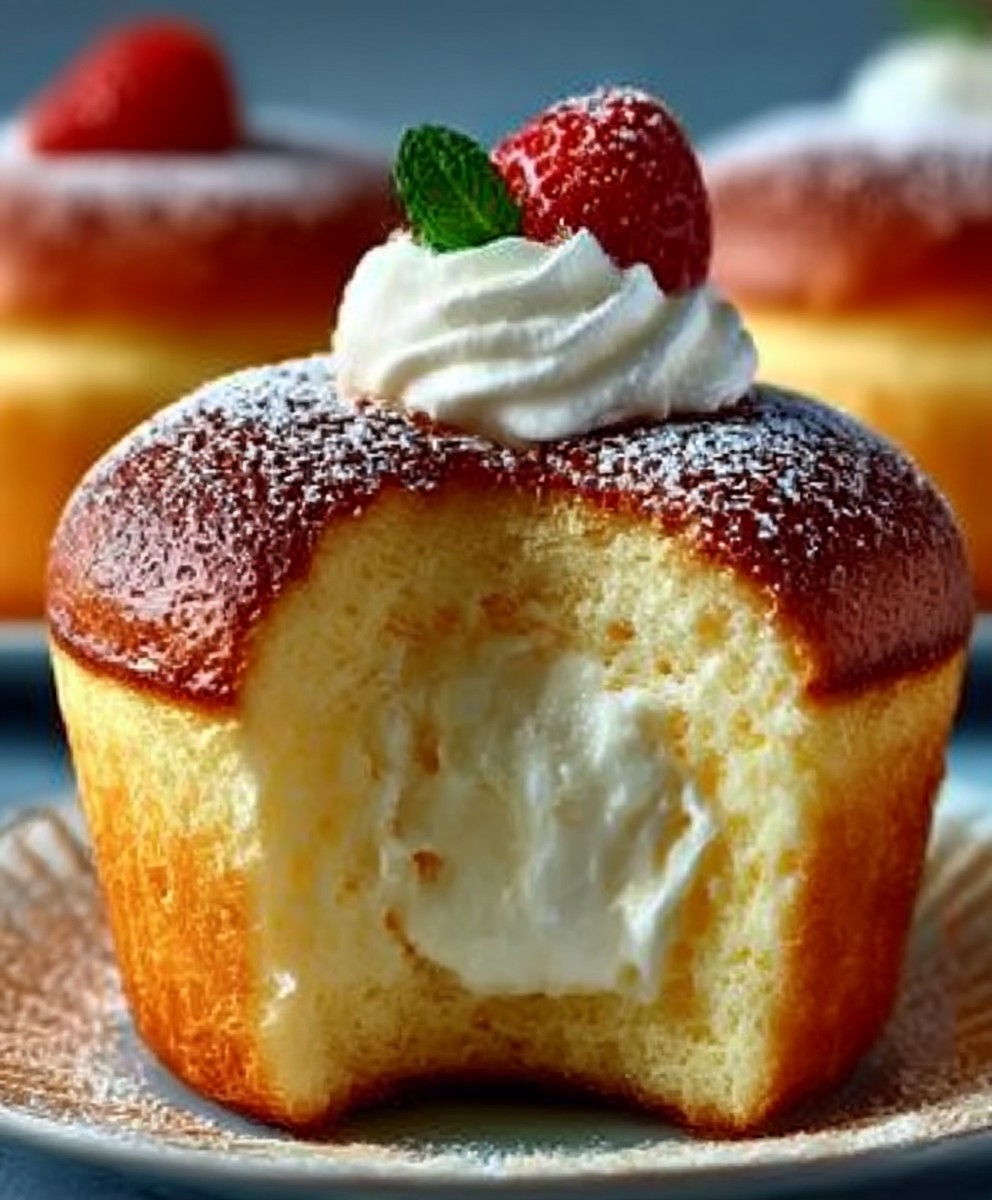
For peak efficiency, start by heating the cream cheese mixture until smooth, then prepare your dry ingredients. While the batter cools slightly, whip the meringue to stiff peaks; this ensures maximum stability before folding, which must be done gently and immediately before transferring the batter to the prepared water bath.
Add Your Touch
Elevate these airy treats by swapping vanilla powder for almond or rosewater extract for a floral note. For a beautiful topping, reduce fresh berry juice (like raspberries or strawberries) with a touch of sugar and use agar-agar for a glossy, set fruit glaze instead of heavy frosting.
Storing & Reheating
Store your finished cotton-soft minis in an airtight container in the refrigerator for up to four days. Always serve them chilled or slightly warmed to room temperature; reheating is not recommended as it can alter the delicate soufflé texture. These also freeze well for up to one month.
The first time I served these, my cousin genuinely asked if they were made of literal cotton wool because she couldn’t believe how little resistance they offered. That’s how you know you nailed the texture.
Expert Tips for Soufflé Success
-
Ensure the egg whites are cold when whipping; this helps them achieve greater volume and a more stable structure, which is crucial for maintaining the “cotton” lift.
-
Always double-wrap the bottom of your muffin tin with aluminum foil before placing it in the water bath to prevent any potential leaks, which would ruin the cheesecake batter.
-
Check your oven temperature with an external thermometer; accuracy is vital, as this cheesecake is extremely sensitive to overly high or fluctuating heat during the long, slow bake.
Conclusion for Fluffy Japanese Cotton Cheesecake Cupcakes
We conquered the physics of the perfect wobbly dessert, and now your kitchen smells like a bakery heaven. These Fluffy Japanese Cotton Cheesecake Cupcakes prove that delicacy and depth can coexist in one bite-sized package. Remember the key rules: patience during the folding process, a loving water bath for a gradual bake, and the cardinal sin of immediate removal. Once you master the gentle art of the Japanese cheesecake, you unlock a world of airy, tangy delight. Go forth and share these cloud-like creations; they are guaranteed to vanish faster than a magician’s rabbit.
Print
Fluffy Japanese Cotton Cheesecake Cupcakes
- Total Time: 35 minutes
- Yield: 4 servings 1x
Description
Achieve the legendary cloud-like lift of Japanese cheesecake! Our guide details the critical double-boiler base and the secret to stiff, glossy meringue peaks.
Ingredients
- 8 oz Cream Cheese, softened
- 1/2 cup Granulated Sugar, divided
- 4 large Eggs, separated
- 1/4 cup Heavy Cream or Whole Milk
- 2 tbsp Unsalted Butter
- 1/4 cup Cake Flour, sifted
- 1 tbsp Cornstarch, sifted
- 1 tsp Fresh Lemon Juice
Instructions
- Step 1: Prepare the cheese base. In a heatproof bowl set over a saucepan of simmering water (double boiler), melt together the cream cheese, butter, and heavy cream until smooth. Remove from heat, then quickly whisk in the egg yolks and lemon juice, followed by the sifted cake flour and cornstarch until the batter is smooth and lump-free.
- Step 2: Create the meringue. In a separate, very clean bowl, use an electric mixer to beat the egg whites until foamy. Gradually add the remaining granulated sugar, beating constantly until the meringue forms stiff, glossy peaks that hold their shape.
- Step 3: Combine and fill the cups. Gently fold one-third of the meringue into the cream cheese mixture to lighten the batter. Then, delicately fold in the remaining meringue in two additions, taking care not to deflate the air. Fill cupcake liners in a muffin tin nearly to the top with the combined batter.
- Step 4: Set up the water bath. Place the muffin tin into a larger, deep baking pan. Carefully pour hot water into the larger pan until it reaches about halfway up the sides of the muffin tin (this creates the necessary steam for a "cotton" texture).
- Step 5: Bake and cool slowly. Bake the cupcakes in the water bath at 325°F (160°C) for 25–30 minutes, or until the tops are golden brown and the centers are set. Turn off the oven, prop the door open slightly, and allow the cupcakes to cool inside the oven for 30 minutes before removing them to prevent sudden deflation.
Notes
- Store leftover cupcakes in an airtight container in the refrigerator for up to 3 days, as the chilled texture deepens the cheesecake flavor.
- While delicious chilled, if you want a subtle warmth, microwave an individual cupcake for just 5-8 seconds to reactivate the soft, airy texture without drying out the edges.
- For an elevated presentation, serve these light, airy cups dusted simply with powdered sugar or alongside a spoonful of slightly tart fresh berry jam or compote.
- When folding the meringue, the goal is volume, so use a delicate figure-eight motion until just combined; visible white streaks are preferable to overmixing and deflating the crucial air.
- Prep Time: 15 minutes
- Cook Time: 20 minutes
- Method: Stovetop
- Cuisine: American
Nutrition
- Serving Size: 1 Cupcake (approx. 70g)
- Calories: 210
- Sodium: 95mg
- Fat: 14g
- Saturated Fat: 8g
- Trans Fat: 0g
- Protein: 14g
FAQs
Why did my Fluffy Japanese Cotton Cheesecake Cupcakes crack on top?
Cracking is a notorious issue when baking these ethereal treats, often caused by rapid temperature changes or over-baking. Think of your oven as a gentle spa, not a sauna. Ensure you are using a proper water bath (bain-marie) to provide steady, moist heat. When the cupcakes are done, do not yank them out immediately! Turn the oven off, prop the door open slightly, and let them cool slowly inside for about an hour. This gradual cooling prevents the sudden shock that causes those unsightly fissures, keeping your beautiful, airy creations intact.
How can I ensure my cupcakes achieve that signature cotton soft texture?
The secret lies entirely in the meringue. You need soft, glossy peaks—not stiff, dry ones like those you’d use for pavlova. Overbeating the egg whites will lead to a dense, tough texture, completely defeating the purpose of a cotton cake. Additionally, when mixing the meringue into the cream cheese batter, use a large spatula and employ a careful folding technique. Stop folding as soon as you see no streaks of egg white remaining. Excessive stirring deflates the air, turning your potential cloud into a sad, rubbery puck.
Can I prepare the Fluffy Japanese Cotton Cheesecake Cupcakes batter ahead of time?
While preparation often saves time, mixing the batter for these delicate cupcakes ahead is strongly discouraged. The lift and airy texture rely entirely on the volume incorporated into the meringue, and that volume begins to deflate almost immediately upon mixing with the heavy cream cheese base. If you let the batter sit for even 30 minutes, you will lose significant height, resulting in denser, less desirable cheesecakes. We recommend preparing all your ingredients, mixing the batter right before baking, and getting those delightful cups into the oven immediately.
Why are my cheesecake cupcakes sinking in the center after cooling?
Sinking usually indicates that the cake was not fully cooked internally or that the water bath was too aggressive. Make sure the internal temperature reaches 180°F (82°C) before turning off the oven. If the center looks wobbly like unset pudding, it needs more time. Also, be mindful of the water level in your bain-marie; if it’s boiling violently, the outside edges cook too fast while the center remains raw. Use hot—but not boiling—water, and ensure the oven temperature is maintained precisely for the specified duration.

Leave a Comment